The Future of the Art Form
Howard Herring recently retired as New World Symphony President and CEO and reflects on his career and what’s to come for orchestral music for Symphony Magazine.

This was written for Symphony Magazine and first appeared online September 25, 2026.
For the last 25 years, my Septembers have felt like yours. Full of expectations for the season ahead, informed by the spirit of adventure established by New World Symphony Co-Founder Michael Tilson Thomas and carried forward by current Artistic Director Stéphane Denève. Eager to engage our 87 Fellows who will spend their year developing as leaders: creative, nimble, independent thinkers. Anticipating the educational and presentational experiments designed to open the imaginations of the Fellows.
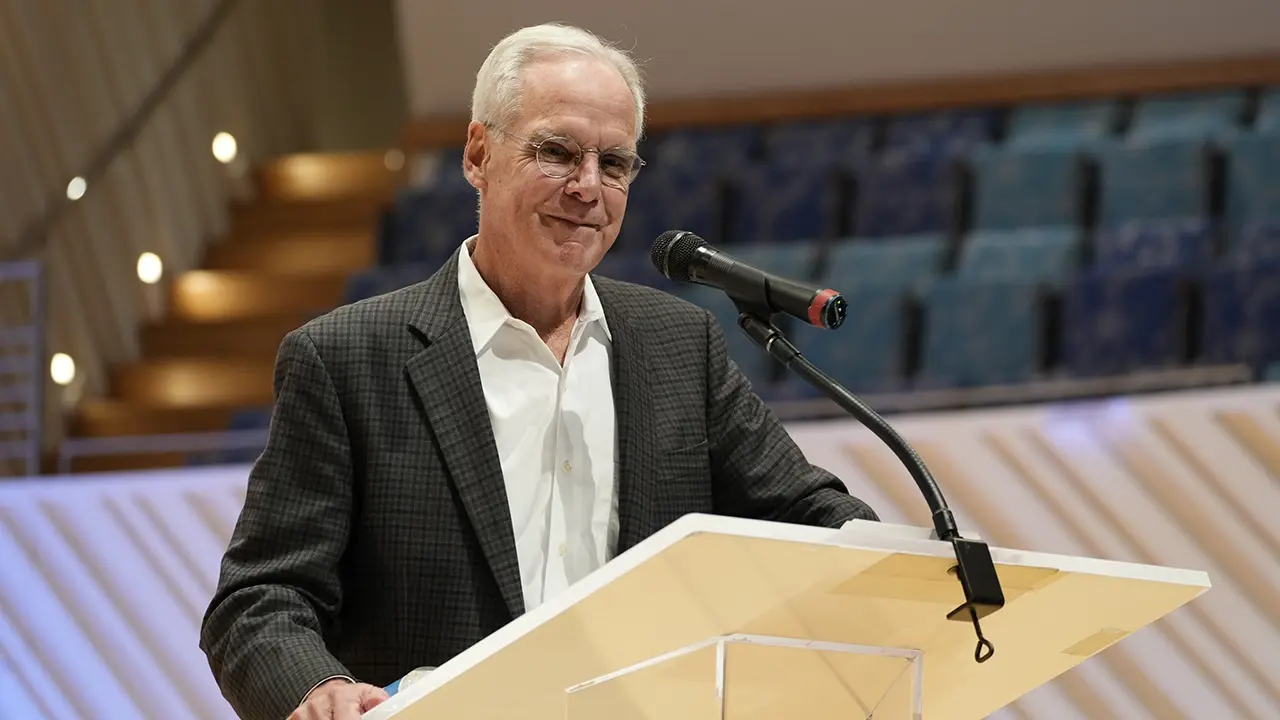
The New World Symphony’s three-year post-graduate fellowship is designed to prepare talented musicians for artistically satisfying careers that will advance the art form. New World Symphony is where the future of orchestral music is envisioned, cultivated, and shared. The institution’s impact can be seen in the achievements of its nearly 1,350 alumni.
Now this is a September of transition. With my retirement as president and CEO of the New World Symphony, I find myself in a moment of reflection. Our art form has evolved significantly over these last 25 years. Going forward, rapid change is guaranteed. I offer my thoughts on our shared future and, with you, remain committed to classical music.
We are defined by what we do. And what we do is make music. Preparation anticipates performance. Preparation is the step-by-step progression into the future. Performance is a culminating moment that is followed by the next preparation period. Using this understanding, the future of the art form is a series of futures, defined one performance at a time. We are always making the future, driven by aspiration, guided by the practical realities of preparation, and, at this moment in time, influenced by digital technology.
Stepping back, we know that the essential elements of classical music respond to fundamental shifts in society. The Gutenberg printing press didn’t just change our use of written language, it reinvented the distribution of musical scores. In the 20th century, electronic broadcasts spread performances beyond concert halls. Thanks to the internet, we have transitioned beyond the one-to-many sensibilities of broadcast to a form of online presentation and dialogue. The digital revolution will continue to change the way we create, distribute, experience, and understand music.
The arc of the musical universe is long, but it bends toward sharing our music with as many people as possible.
Let me direct attention toward composer Matthew Aucoin’s thoughtful essay in the April 2025 issue of The Atlantic. He equates classical music with written music—ideas that emerge from the imagination of composers and find their way to the blank page. Musicians bring the music to life and become the first distribution system. He goes on to say that “Written music matters for the same reason written language does: to write is to free oneself from the constraints of memory.” We gain from what he calls “the miraculous scaffolding that emerges from the accumulation of thoughts on the page.” From page to musicians to audience, this transfer sequence has been in place for centuries. Electronic amplification and broadcast extended the distribution and altered the understanding of audience.
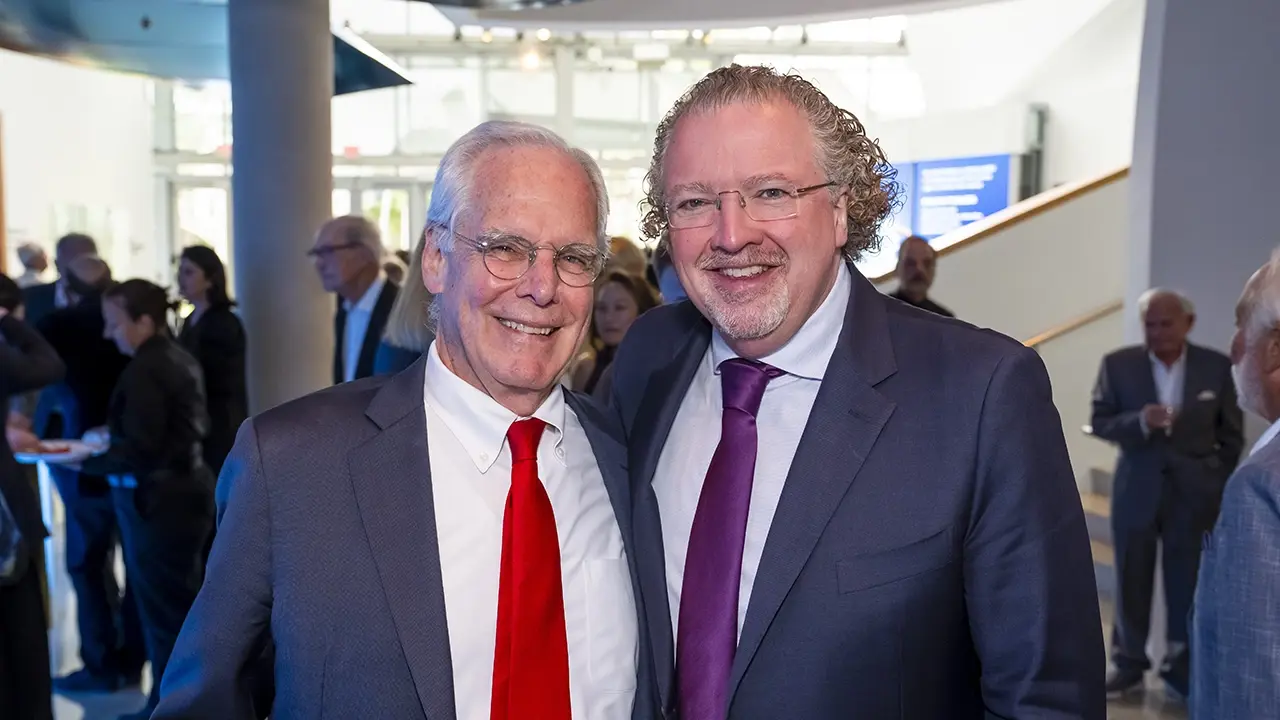
Digitized Distribution
Now, digital technologies are changing the rules. We are finding our way to new performance experiences, visually more engaging than the nearly static look of an orchestral performance. AI is the next frontier. Taking a lesson from our musical forebears who confronted new technologies, we will use our intellect and aesthetic senses to make the most of our opportunities.
Another consideration. Just now, digital capture and distribution of classical music is ubiquitous. But it is only a mediated expression. Walter Benjamin’s essay “The Work of Art in the Age of Technological Reproducibility” was published in 1936. He focused on new forms of reproduction of his age: photography, film, and radio. He compared those experiences with what he called “aura”—what surrounds a work of art when we are in its physical presence. His judgement: reproduction dilutes aura. Alex Ross in a September 2017 article in The New Yorker summarizes Benjamin’s observation: “When copies compete with originals, and when new works are produced with technology in mind, the old values of ‘creativity and genius, eternal value and mystery’ fall away.” Then Ross continues with a second thought from Benjamin, “For the first time in world history, technological reproducibility emancipates the work of art from the parasitic subservience to ritual.” Benjamin’s observations apply today though the width and breadth of contemporary reproducibility is far larger thanks to digital technology.
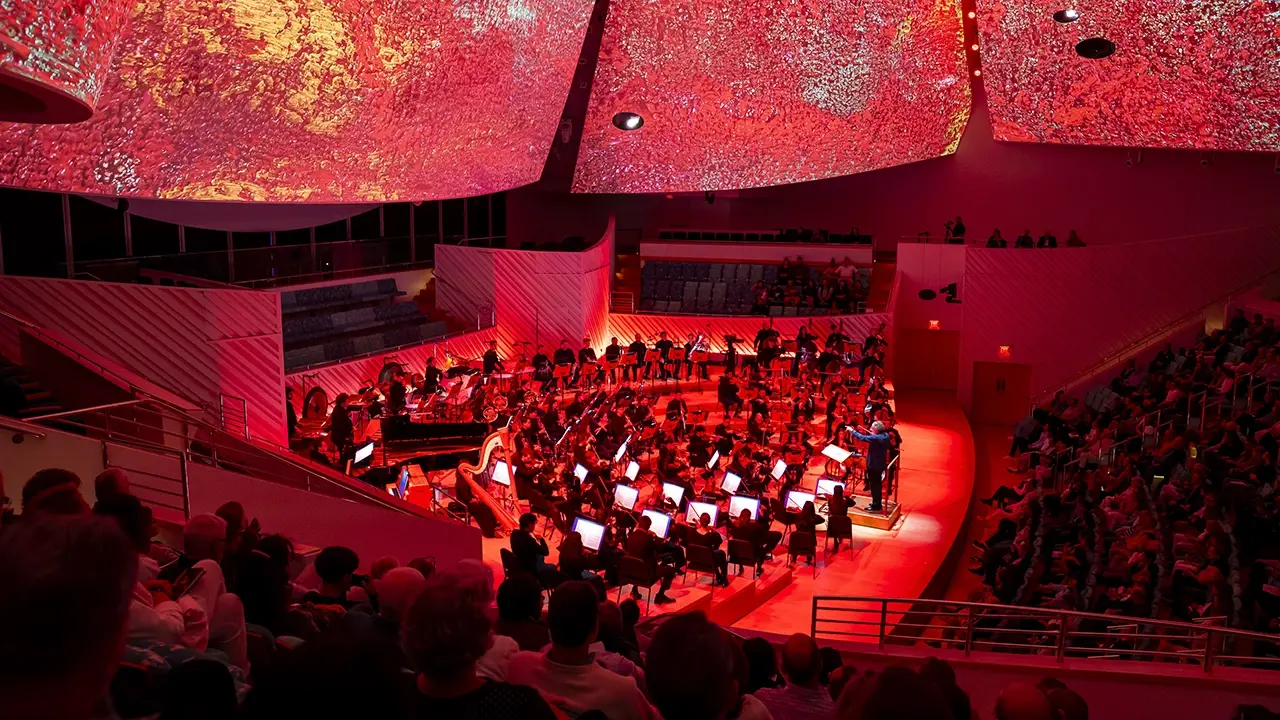
Little by little, we are getting smarter about understanding the relationship of media to message. Decades ago, philosopher Marshall McLuhan and others alerted us to the fact that the medium will have significant and meaningful influence on the message. Having encountered McLuhan’s Understanding Media in the late 1960s, I have watched the digital age unfold within the context of his observations. They were radical when written but seem to apply readily to our current media environment. His catch phrases continue to resonate: “the medium is the message,” “we shape our tools and thereafter our tools shape us.” Without hesitation, I can say that experimentation with new performance formats and online learning at the New World Symphony over the last 25 years confirms both of these McLuhan aphorisms. I believe our integration of projected images and colors into the concert hall experience would have made McLuhan’s eyes twinkle. The syntax of classical music is combining with the mosaic of visual images within a time-based artistic presentation.
Mixed Media and More
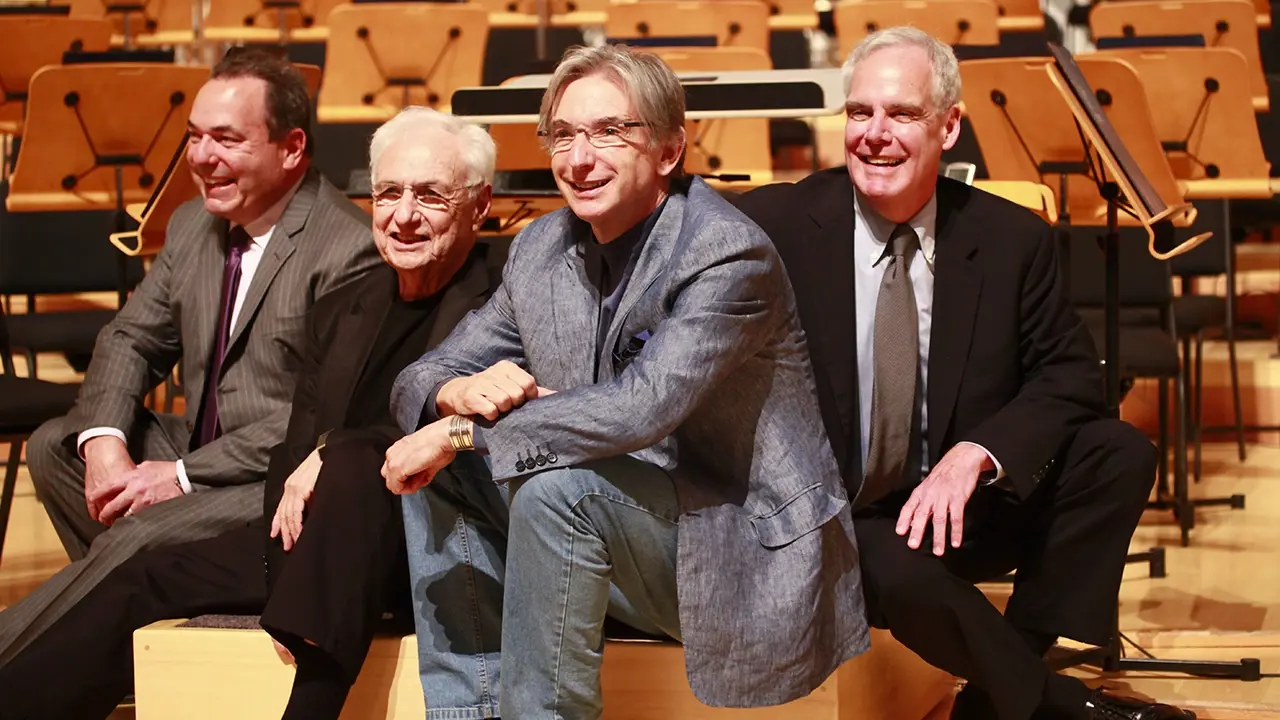
Building from here, I think orchestras need to explore integration of multiple artistic disciplines. New World Symphony’s campus, the New World Center, was designed in the early days of the digital revolution. We imagined a research and development arm of orchestral music, a test bed for generating new ideas about the way music is taught, presented, and experienced. Digital technology laces tightly to the New World Center’s performance spaces, including the concert hall, studios, public engagement areas, and an advanced outdoor projection system that allows us to broadcast live concerts onto the 7,000-square-foot facade of the New World Center—a phenomenon called WALLCAST® Concerts.
WALLCAST® is worthy of explanation. Ever more sophisticated camera and microphone systems make it possible to capture orchestral concerts in vivid detail. When transferred to a personal screen, the power of the performance is often diminished. When carried by fiber optic cable to powerful projectors that reproduce the performance through 4K Ultra High-Definition sight and a unique Meyer Constellation Sound System, the reverse is true. A new venue is created, occupied by several thousand people, and we move back into the territory of individual transformation in a communal setting. Others have begun to investigate this application of digital technology.
With an eye toward an undefined future, we knew flexibility of the digital infrastructure was essential at New World Center. One specific aspiration was to explore the possibilities of recombining sight and sound. The goal was to rebalance these two stimuli, moving beyond film where the narrative governs and the music supports the story line. While I am far from an objective observer, I think it is possible to find an integration of images and music that may be a new form of expression.
When Alex Ross attended the opening week of concerts at the New World Center in January 2011, he experienced Polaris, with music by Thomas Adès and video projections by Tal Rosner. To quote Ross’s review, “At Frank Gehry’s New World Center, in Miami Beach, the fusion of live music and film is so seamless that it almost heralds a new genre.” He may be right, but more exploration can only happen if the next concert halls are reimagined with that kind of integration in mind.
With each year, our experiments have become more complex. In Fall 2024, the New World Symphony produced Viktor Ullmann’s The Kaiser of Atlantis. (Ullmann and librettist Peter Kien started the score while interned by the Nazis in the Theresienstadt concentration camp; the work was given its world premiere in Amsterdam in 1975.) Using IMAG technology, the characters in the opera appeared simultaneously on four stages within the New World’s performance hall. Reality was suspended in a novel way. Taking advantage of our immersive digital projection, in 2025 Anna Clyne created PALETTE. Nine paintings, nine responsive orchestral scores, and our theatrical lighting united the elements. From my perspective, the results were magic. The future of this approach to artistic expression is filled with promise.
For twenty-five years, I have asked each incoming New World Symphony Fellow to recount the moment they decided they had to be a musician. For the majority, the epiphany arrived in their early teens when an honors program or summer camp brought them together with other talented music students of their age. Insightful instruction and moral support took them from self-discovery into the development of their curiosity. Little by little, they learned that excellence is a process worthy of their time and commitment. There is a second understanding I see in contemporary young artists. A significant percentage of them are independent thinkers who are ready to act on their novel concepts for community and audience engagement within the context of excellent artistic expression. I am reminded of a passage from Emerson’s essay On Self Reliance:
And truly it demands something godlike in him who has cast off the common motives of humanity and has ventured to trust himself for a taskmaster. High be his heart, faithful his will, clear his sight, that he may in good earnest be doctrine, society, law, to himself, that a simple purpose may be to him as strong as iron necessity is to others!
Observe that he punctuates this paragraph with an exclamation point. Message received, Mr. Emerson. We would be wise to encourage these independent-minded musicians and support their artistic concepts and initiatives. They are grounded in the discipline and aesthetic of classical music, and they are inventing the future. I rest easy knowing they will carry this art form forward.
--
Howard Herring was President and CEO of the New World Symphony in Miami Beach from 2001 to 2026. After studies at Southern Methodist University and Manhattan School of Music, he was pianist of the Claremont Trio and a musician and teacher in New York City. In 1986, he became executive director of the Caramoor Music Festival. In 2001 he assumed leadership of New World Symphony, a post-graduate fellowship program for aspiring classical musicians and leaders, where he was instrumental in establishing a global online music community, prioritizing the integration of music and video in live concert settings, and engaging new audiences through novel performance formats.